

 Don Herman
 Best Times and How Far in Advance to Book a Cruise
- Cruise Planning Guide, Part 1: Cruise Budget Tips
- Cruise Planning Guide, Part 2: Choose Your Cruise Type
- Cruise Planning Guide, Part 3: Cruise Itinerary Planning Tips
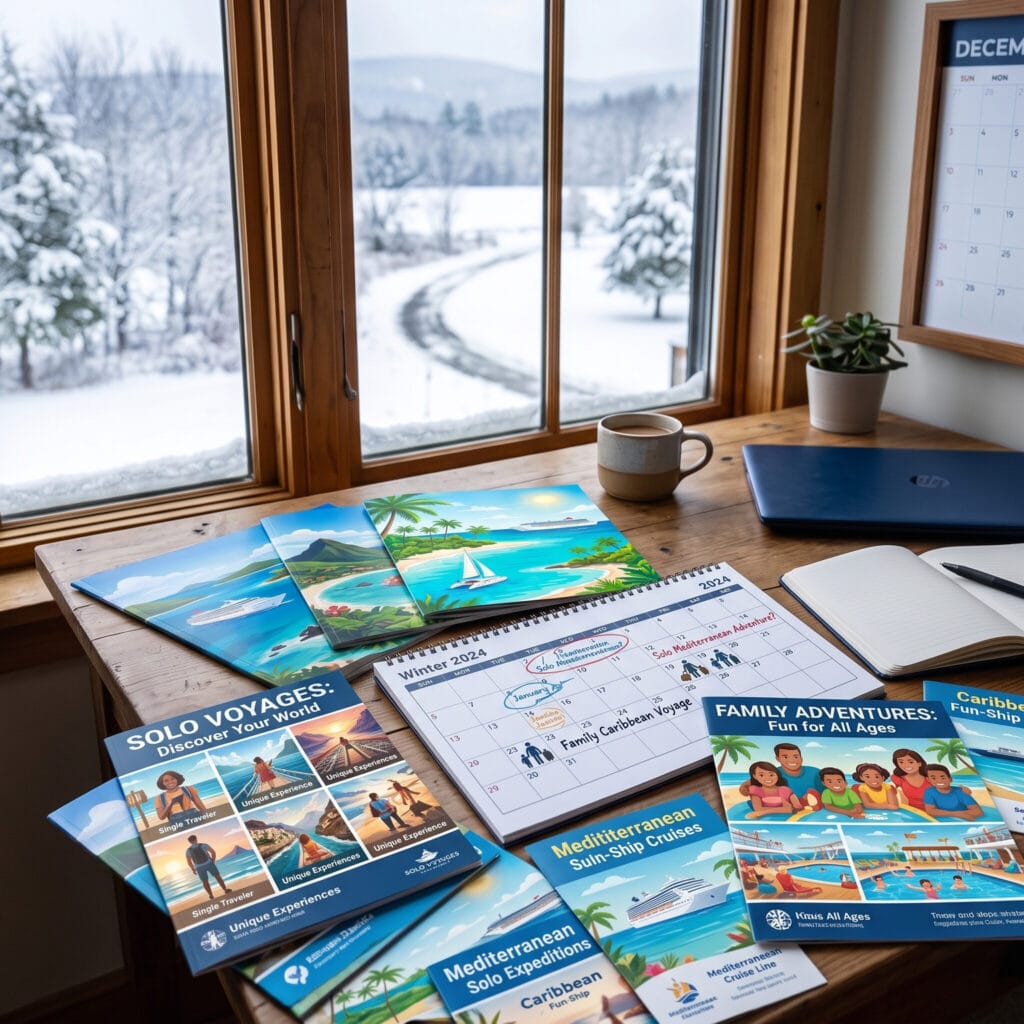
The best way to book a cruise always comes with choosing the time of year I want to travel. Ships sail year-round in some regions, but prices, crowds, and onboard experiences can change drastically with the seasons. For most warm weather trips, for example Caribbean or Mediterranean, peak season runs from late spring through summer, with holidays and school breaks commanding higher prices and more families onboard.
If I’m planning for fewer crowds or lower fares, I look for “shoulder season” voyages. These occur just before or after peak travel periods, like April to May or September to October. I often find the weather is still great, but the ships are less crowded and cabins are more affordable. The overall mood onboard also feels more relaxed, and popular venues are easier to enjoy without long waits. I also stumble upon unique festivals or local events in ports, making shoulder season a favorite for cultural experiences.

Booking early can lock in lower prices and give me the widest choice of cabins, especially on new or popular ships. For traditional ocean cruises, booking 9 to 18 months ahead works well if I have specific dates or cabin types in mind. River cruises often require similar lead times, and these ships are smaller, so cabins sell faster. Last-minute deals pop up sometimes (a few weeks to 2 months before sailing), but the risk is higher for limited cabin selection and choice in itineraries. Sometimes, the best itineraries and suite-style cabins are gone well before these deals are released.
If I’m going solo, some ships have solo cabins, but they go quickly. Early booking almost always helps snag the best rates on these. For family vacations, school holidays get competitive, so I try to book 12 months out for the best selection of family staterooms or connecting cabins. If accessibility is a factor and I need a mobility-friendly cabin, those are in short supply and need to be secured as far in advance as possible, sometimes up to two years before sailing for very popular itineraries.
Picking How to Book: Travel Advisor, Booking Direct, or Online Agency?
Once I know my desired time frame, I turn to how I want to book. Each method offers different perks and levels of support.
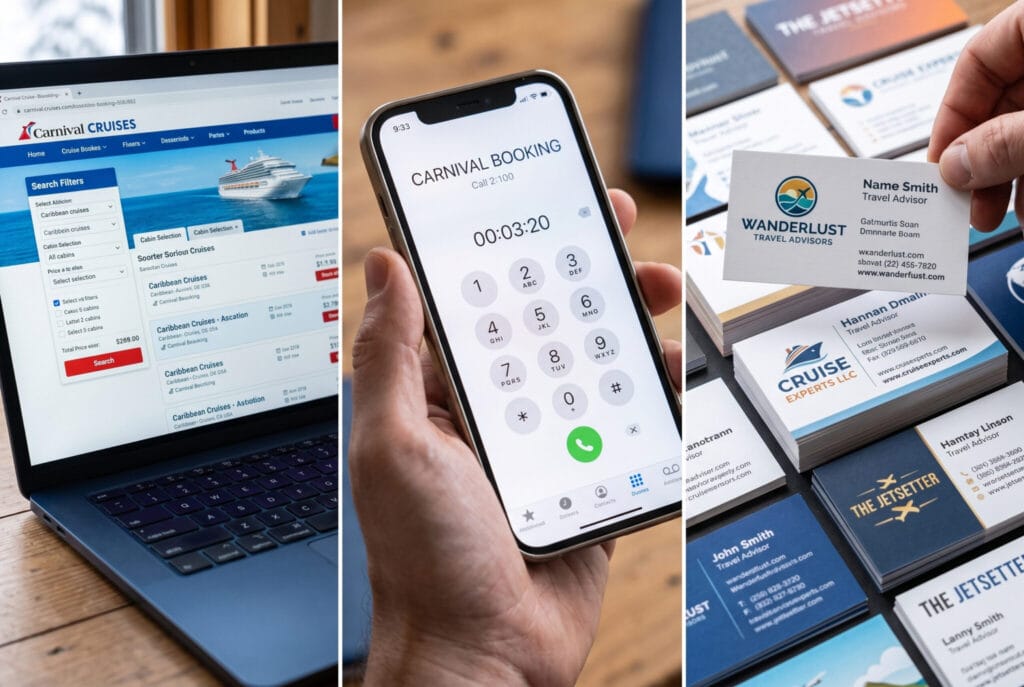
- Personal Travel Advisor or Agent: This is my go-to if I want someone to handle everything, especially for complicated itineraries, special requests, or group bookings. An agent often finds exclusive promotions and will stand behind me if something changes. This is especially helpful for river cruises or longer ocean voyages, and agents may even set up private events or secure extra perks onboard.
- Booking Direct with the Cruise Line: Calling or using the cruise line’s website works if I like more control and want to speak directly to the cruise operator. It’s simple for straightforward bookings and I can ask questions about cabins, dietary needs, or loyalty perks in real time. Sometimes, the direct method is best for loyalty program benefits or applying past guest offers.
- Online Travel Agency (OTA): When I want to comparison shop, I use trusted OTAs. These platforms let me see lots of options and prices at a glance, sometimes offering rebates or onboard credit. If I go this route, it’s really important to keep records of my confirmation and payment details. OTAs can make it easy to filter cabins, ships, and departure dates on a single screen, which is handy when my plans are flexible.
What You’ll Need to Decide Before Getting a Solid Cruise Quote
Getting a cruise quote means answering some key questions. Having my preferences figured out makes the process faster and helps me compare apples-to-apples between lines and agencies. Being clear also eliminates confusion later, so I always write down my top needs before I reach out.
Refundable vs Non-refundable Fares
Cruise lines often offer discounted non-refundable deposits for certain fare types. These save money upfront, but if plans are at all uncertain, I go for a refundable fare. The flexibility is worth paying a little more if I think anything might come up. Non-refundable fares might also have stricter cancellation policies, so I double check the terms before booking.
- Non-refundable: Lower price, penalty if I cancel or need to change.
- Refundable: Higher upfront cost, easier to get my deposit back or change my plans.
During sales events or promotional periods, both fare types may offer added incentives like free onboard credit or dining packages — another reason to check details before selecting.
Choosing Premium Level Fares
Most cruise lines sell basic fare levels, but some bundle upgrades into “premium” packages. For example, Princess Cruises offers Princess Plus and Princess Premier, which can include drinks packages, WiFi, specialty dining, and crew gratuities. I weigh the cost against what I’d likely spend onboard. Sometimes the premium package is only a modest increase, making it a good value if I’d buy these extras anyway. Be sure to check if any added perks are truly valuable for your cruise style before opting in.

Cabin Location: Fore, Aft, or Midship?
Where I book my cabin on the ship really does affect comfort. Midship cabins on lower decks offer the smoothest ride if I’m prone to seasickness, while forward (front) and aft (back) cabins are more likely to feel motion and sometimes noise from anchors or engines. Higher decks can bring better views, but they might also mean more movement in rough seas.
For noise, midship cabins away from elevators and public areas usually offer quieter experiences. I always check deck plans online to avoid being under the gym, above a theater, or next to crew entrances. If traveling with children, proximity to kids’ clubs might be an advantage, so it depends on my group’s needs.
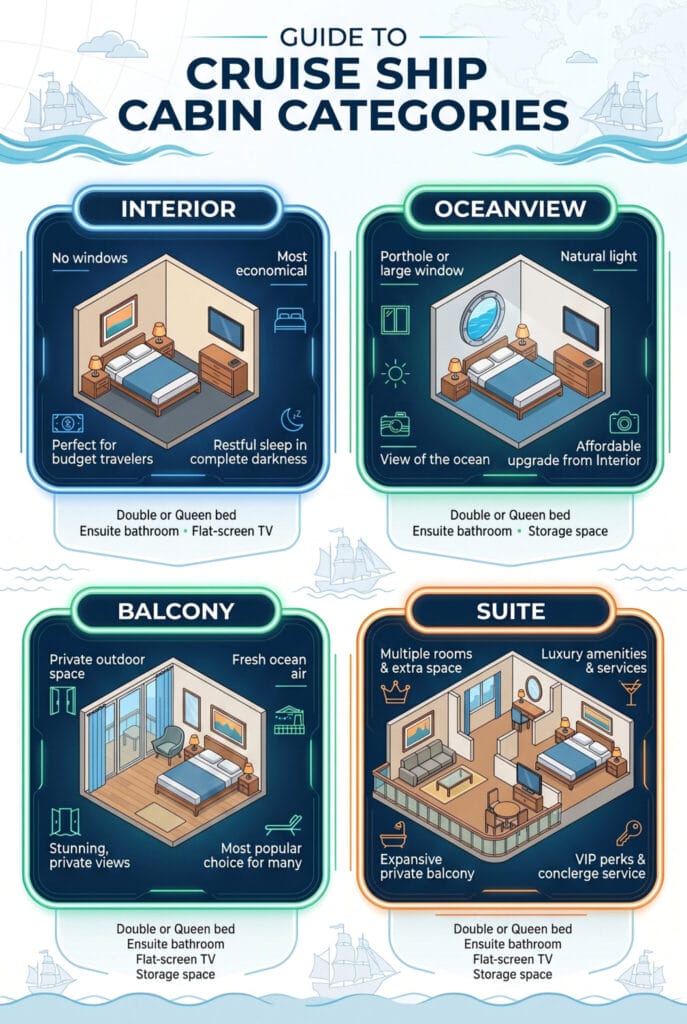
Cabin Category: Inside, Oceanview, Balcony, or Suite
This is one of the bigger choices for my cruise experience, as well as my budget. Here’s my quick breakdown of what I consider at each level:
- Inside cabins: No windows, usually the lowest price. This works for me if I plan to spend most of my time outside the cabin.
- Oceanview: Window or porthole, but doesn’t open. More daylight but still affordable. Some cruisers value even a small view of the ocean in the morning or at bedtime.
- Balcony: Private outdoor space, great for morning coffee or quiet evenings. Balcony prices range a lot depending on location; sometimes views are partially blocked, so I double check online reviews or ship maps. On scenic itineraries, like Alaska or Norway, I think a balcony can make the trip extra-memorable.
- Suites: Larger space, upgrades like priority embarkation, premium amenities, and sometimes access to dedicated lounges or dining. Higher cost, but a fun treat for milestone trips or when I want extra comfort.
For families, I look for connecting cabins or larger staterooms. Some cruise lines have family-specific rooms with extra beds and storage; others offer split bathrooms, making morning routines easier.
Understanding Cabin Locations Prone to Noise and Disturbance
Noisy locations include cabins under the pool deck (due to moving chairs and early cleaning), near theaters or lounges, or beside crew areas. If noise sensitivity is an issue for me or my travel companions, I always check forums and ship deck plans to make an informed choice. Some ships publish specific quiet zones or family-focused areas, so doing that bit of research pays off in finding just the right space.
Should I Buy Cruise Insurance from the Cruise Line?
I always shop around before adding cruise insurance directly through the cruise line. Their insurance is pushed hard during the booking process, but policies can be pricey with blanket coverage that may not fit what I really need. Outside insurance providers let me compare plans, coverage amounts, and levels—for example, if I’m not a golfer, I don’t need golf coverage. If I’m traveling with someone who is medically fragile, I prioritize emergency travel and evacuation insurance. Checking reviews and comparing exclusions can make a real difference in peace of mind.
For more tips, see my article on Should You Buy Travel Insurance?
Add-On Packages: Drinks, Specialty Dining, and More
Some cruise fares let me bundle extras upfront (like drink packages or WiFi), especially at the premium level. If I’m undecided, I skip these extras when booking and decide once onboard or closer to my travel date. Drink packages, excursions, photo packages, and spa treatments can often be added later or purchased individually. Sometimes cruise lines run special sales on these ahead of departure, so watching for email offers can add value without commitment weeks in advance.
Comparing Ocean and River Cruise Booking
The booking process for ocean and river cruises is mostly the same—I still select dates, cabin types, fare levels, and optional extras. The biggest difference is that river cruises, especially in Europe or Asia, usually involve smaller ships and fewer cabin choices. Because space is very limited, I find it especially important to book well in advance for river cruises. Ocean cruises may give me a bit more last minute flexibility, though popular sailings or special events still fill up quickly. If scenery and port stops are a top priority, river cruises could be more appealing, whereas ocean cruises often have more onboard activities and entertainment. Either way, building in time for preor postcruise stays at your embarkation city adds depth to the overall adventure.
Tips for Getting the Best Experience When Booking a Cruise
- Make a checklist of what matters most for you—timing, price, cabin type, itinerary, ship amenities—before contacting a line or travel advisor. This saves time and helps you compare offers later.
- Have passport and emergency contact information ready, since many quotes require this for accurate pricing.
- Research the ship’s deck plans and recent reviews, especially for tips on cabin noise or accessibility features, even if you’re an experienced cruiser. New ships or refurbishments can mean fresh layouts to learn about.
- If you’re flexible, ask about “guarantee” cabins (letting the cruise line assign your cabin last minute) for potential upgrades or discounts.
- Check all terms in the fare, including refund, cancellation, and change policies, before paying a deposit. Hidden fees sometimes show up in the fine print, so a quick review is worth the time.
Frequently Asked Questions About Booking a Cruise
Can I hold a cabin without paying right away?
Often, cruise lines and agents let me place a free or low-cost hold for 24 to 72 hours, especially if I need extra time to confirm travel dates or companions. This can be really helpful if I want to discuss with my travel group before making a commitment.
Why do some prices vary so much for the same trip?
Pricing changes daily based on demand and sales. Booking earlier often locks in the best price and cabin choice, but sometimes flash sales pop up close to departure for unsold cabins. Popular itineraries and new ships are particularly price sensitive, so acting quickly can pay off.
Is booking directly with the cruise line better than using an agent?
It depends. I like direct booking if I know exactly what I want or have status with a line. For more complicated trips, an agent usually finds me deals or perks I couldn’t get otherwise; they’re priceless if something needs to be fixed before or during the trip.
Do I really need travel insurance?
Yes, I recommend some level of travel insurance for cruises, since medical care at sea is expensive and flight connections can be unpredictable. Compare cruiseline policies with third-party plans to match your travel style and risk level. The peace of mind alone is usually worth the small investment.
Wrapping Up: Final Thoughts on Booking a Cruise
Making clear decisions up front—from timing to cabin type to fare preferences—makes booking a cruise much simpler and more enjoyable. Whether booking on my own or enlisting expert help, keeping track of key choices ensures I start my cruise on the right foot and get the most out of my vacation. Advance planning gives the best shot at securing the cruise experience that’s right for me, my family, or my solo trip. Ready to start planning yours? Remember, a little preparation goes a long way in building a vacation that you’ll remember for years to come.