

 Don Herman
 Article 3 of 13 in our Cruise Planning Guide — how to plan a cruise, one decision at a time.
Planning a cruise is more than just daydreaming about turquoise waters and far-off cities — the real excitement sets in when I buckle down and choose my itinerary. That’s exactly where these cruise itinerary planning tips come in: the region you pick, how you balance sea days and port stops, and even where you fly in and out all shape the trip you’ll actually remember. Get this part right, and everything else — your budget, your excursions, your whole vacation — falls into place around it.
This is the third part of my Cruise Planning Guide series. If you’ve taken a look at the earlier parts—What a Cruise Really Costs and Choose Your Cruise Type—you’re in a great spot to make your trip mesh perfectly with your interests, schedule, and hopes.
Picking a Region That Matches Your Dreams
Once I get past which type of cruise I want to take (river v. ocean), the next big choice I make is where I actually want to cruise. Each region brings its own character and attractions. For warm weather and laid-back vibes, the Caribbean offers beach days, colorful markets, and eye-catching marine life. If history and culture are at the top of my list, Europe and the Mediterranean wow with ancient ruins, medieval cities, and world-class food. Cruises in Asia often mix bustling cities with calm coastal landscapes—a pretty intriguing mix.
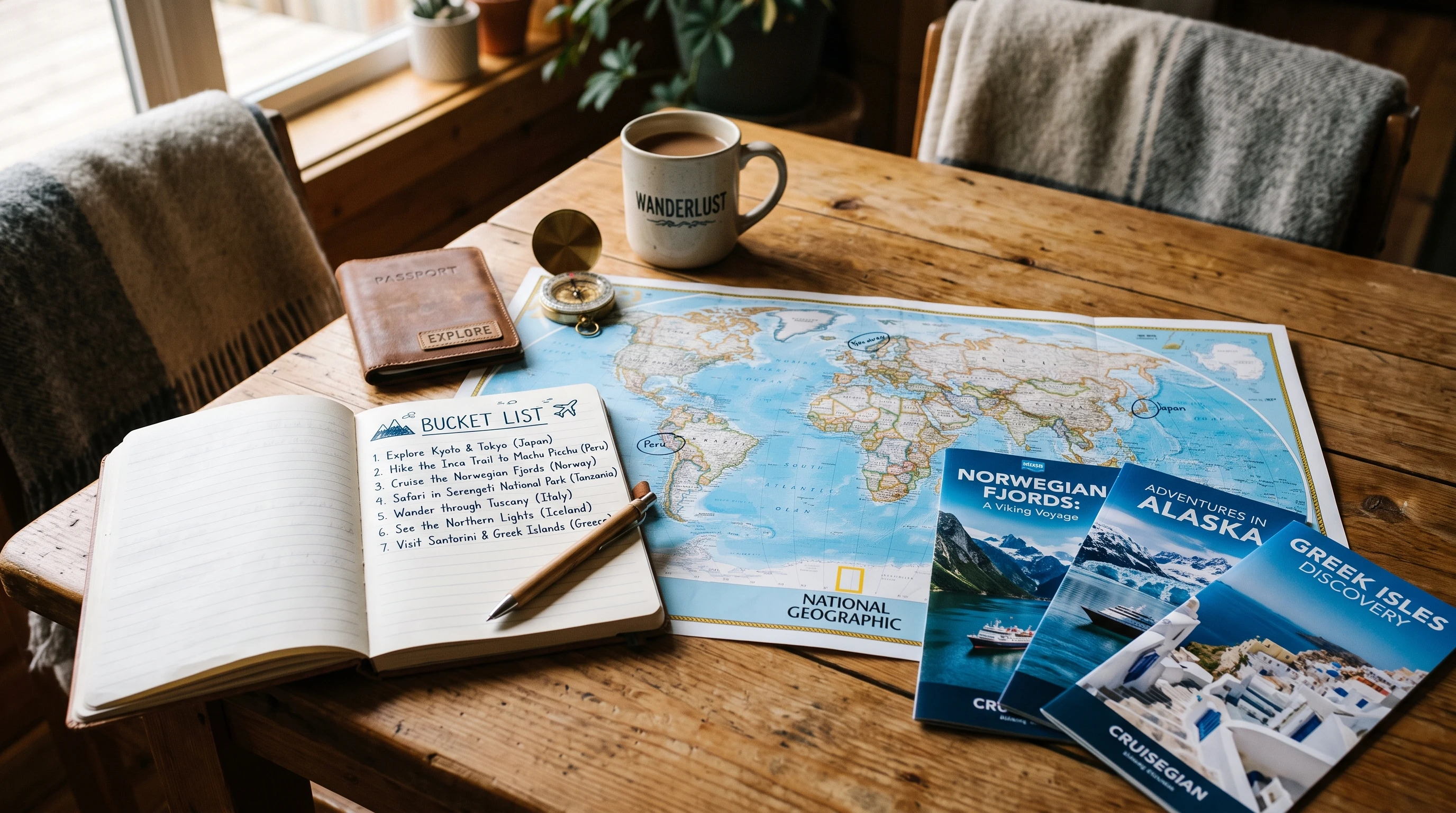
If wild landscapes call me, Alaska’s glaciers and wildlife deliver a different kind of adventure. The Norwegian Fjords bring scenic beauty to a whole new level. When I research regions, I jot down places I’ve always wanted to visit. The best part? I don’t stash them on a “bucket list.” I pick one and set foot there. My advice is clear: don’t just create a bucket list; live your list, one cruise at a time.
Making Your Dreams a Reality
Our regular readers know that neither Dwaine and I are big fans of the “bucket list” concept. What we’ve seen is people making bucket lists, but then the bucket just gets fuller and fuller and nothing ever gets realized.
So when I told Dwaine I’d always wanted to see the Northern Lights – that was his cue to start dreaming. We did the research, and found one ship with the perfect itinerary: Search for the Northern Lights: a Princess cruise revolving around the Lights, with lectures and excursions matched up to the experience. We got the pricing and dates . . . and it all fell together like the final few pieces of a puzzle. He even pitched it to his sister and brother-in-law who immediately signed on with us.
But it didn’t end there. Since we were flying all the way to London to then sail out of Southampton to Norway, Dwaine wondered if there wasn’t another cruise that we could match up with that one, that would end and begin on the same day. Sure enough, we found a British Isles cruise that ended on the same day that our Norway cruise began – a two-fer!


Aligning the Itinerary With the Cruise Type
The itinerary always works hand-in-hand with the type of cruise I’ve chosen. Ocean cruisers typically want plenty of sea days and ample ship entertainment, while river cruisers go for cultural stops with time onshore. If I picked a smaller expedition ship, my itinerary might head for remote destinations that big ships just can’t access.
Matching itinerary to cruise style keeps things running smoothly. If my trip is all about relaxing and recharging, more days at sea work perfectly. If exploring new places is my main goal, I look for itineraries with a healthy number of port stops. Luxury lines focus on longer stays in port, while family-friendly cruises strive for a balanced mix of sea and port days to keep things lively but not overwhelming. The decisions we covered in Choose Your Cruise Type have a real impact here.
Balancing Sea Days and Port Days
Every cruise offers a unique blend of sea days and port days. Some cruises give you full days at sea; perfect for enjoying the ship’s pools, restaurants, or finally catching up on sleep. Other itineraries load up on port calls, keeping me busy exploring a fresh city or island each morning. I always aim for a balance, so I avoid feeling either rushed or bored. If I’m cruising with family or friends who love activities, sea days give everyone a chance to unwind. If I travel solo or with a partner itching to explore, more ports keep the adventure humming.
When sizing up different itineraries, I study the daily schedule. Some sailings offer long hours in port, while others stick to short visits. Deciding if I want longer stays in fewer locations or quick stops in more places helps me find the right rhythm for my trip. It’s also helpful to consider time zone changes and local events that might affect port experiences.
Thinking About Embarkation and Disembarkation Ports
Cruises can start and finish in different cities or the same port. This has a bigger impact than just convenience. Flying to Europe or Asia for a cruise may stretch the budget more than sailing from a local port, so I weigh airfare and travel time into my decision. Sometimes, embarkation ports are amazing cities themselves—Barcelona, Venice, or Sydney, for instance—so I make sure to explore them before or after the cruise whenever possible.
If I’m traveling from afar, I always add an extra day or two at the start or end of the trip. It lets me knock off jet lag and relax before boarding. It’s also a backup in case flights don’t go as planned. Rushing straight from the airport to the cruise terminal is less fun and often stressful. When going somewhere with plenty to offer, like Rome or Tokyo, I check out local tours or day trips, and book hotels early to snag better rates and more options.
Practical Considerations: Entry Requirements, Health, and Accessibility
Traveling internationally brings important details that I never overlook. Entry rules and visa requirements can vary. For instance, some Caribbean cruises require no extra paperwork for US passport holders, but cruises that stop in Egypt or India require visas, either in advance or on arrival. I always look up the entry requirements for every port before booking, since these rules change often.
For entry and visa rules by country, check the State Department’s country information pages. For information about recommended vaccinations for specific locations, see the CDC’s travel vaccine recommendations.
Some places need proof of certain vaccines. If you have specific health concerns or accessibility needs, check that both the cruise line and ports can handle them. I would reach out to the cruise line or my travel advisor if I have questions about mobility or medical services. Travel insurance is also something I always check to cover any surprises.
For extra peace of mind, I keep both digital and paper copies of my passport, visas, and any important medical info that may be needed while traveling.
Budgeting for the Right Itinerary
Itineraries can have a heavy influence on how my cruise budget shakes out. Longer trips or cruises venturing into multiple international ports tend to cost more—especially when I add flights, excursions, and spending money. Sailings from home ports or close-by regions usually land on the more affordable side. I also factor in the possible cost of extra nights, tours, or meals before and after the cruise, as these can ramp up the expenses.
Booking midweek flights often saves me some cash compared to weekend departures. Traveling during shoulder seasons, like late spring or early fall, can bring deals and fewer crowds with similar sights. The key is to plan ahead—and know my must-see spots—so I don’t get stuck with expensive last-minute changes. Many cruise lines even add perks like onboard credit or included excursions during these periods, sweetening the deal.
More Cruise Itinerary Planning Tips
Is there a best region for first-time cruisers?
Many first-timers go for the Caribbean or the Mediterranean. These routes are popular, deliver plenty of variety, and make for smooth sailing. But really, you should pick a region that sparks your curiosity and matches your favorite kind of culture or activities—not just the most trending spot.
How do I know if a cruise port requires a visa or special entry permission?
I always check the official cruise line website, then I head over to the government sites for each country I’ll visit. Cruise forums and travel agents help, but I rely most on official sources for the latest info.
Can I extend my trip easily before or after my cruise?
Absolutely. In fact, adding days onto your cruise adventure is a great way to make the most of your travel investment. Book hotels in advance, ideally near the port, using reputable sites or through the cruise line itself. A lot of cruise lines provide pre- and post-cruise hotel packages, sometimes bundled with airport transfers, to make it easy.
Living Out My Bucket List
Dwaine and I used to keep dream destinations tucked away in our minds, waiting for “someday.” What we’ve learned is that taking action always beats waiting for the perfect conditions. Every cruise we plan is a new chance to finally experience a place we’ve yearned for. Instead of letting the bucket list grow, pick one destination and jump in! That approach transformed my adventures, turning hopes into real stories and photos that still make me smile.
I’d love to hear your comments and questions below. If you want more details from this cruise planning guide or need extra info about choosing the right itinerary, post your questions or travel stories. Let’s make planning your next cruise both easy and fun.
Next up in the guide: Decide How to Book. Or head back to the full Cruise Planning Guide to pick up wherever you left off.


